The Art of the Setting: A Guide to the Perfect Wedding Table
Affiliate Disclosure: This post contains affiliate links. I may earn a small commission at no extra cost to you.
When your guests take their seats at the reception, the table setting is the first thing they interact with. It is the tactical heart of the guest experience. While "etiquette" can sometimes feel stiff, these traditional rules actually serve a purpose: they ensure your guests have every tool they need for a seamless dining experience. Whether you are hosting a formal five-course meal or an intimate family-style dinner, a cohesive setting is the hallmark of an intentional host.
1. The Anatomy of the Place Setting
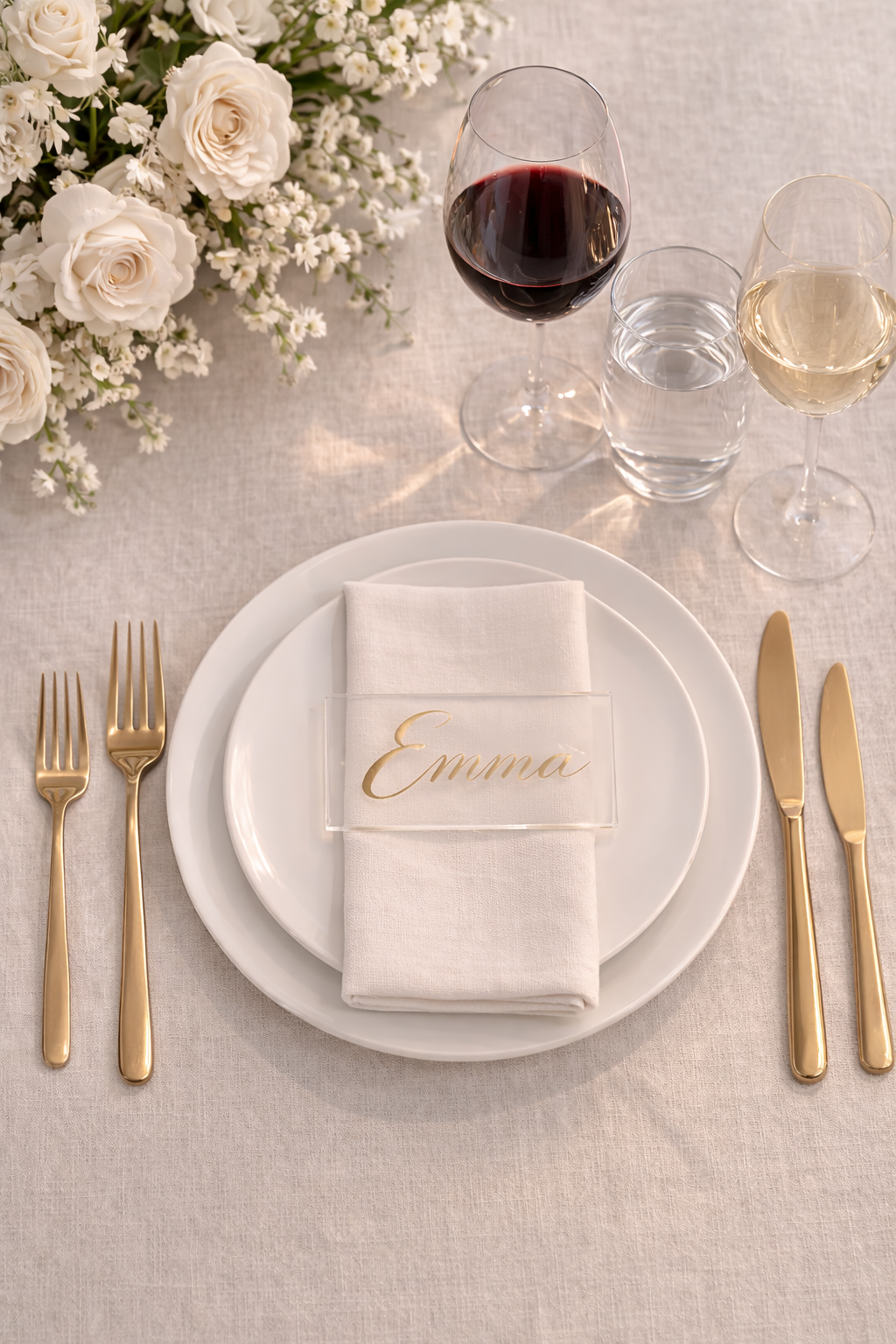
To keep things simple, follow the "outside-in" rule. Cutlery is placed in the order it will be used, starting from the furthest point from the plate.
The Essentials (From Left to Right):
The Salad Fork: The smaller fork on the far left.
The Dinner Fork: The larger fork placed closest to the plate.
The Plate: Centered in the middle of the setting. If you are using a "Charger" (a large decorative base plate), it stays on the table until the main course is served.
The Dinner Knife: Placed to the immediate right of the plate, with the blade facing inward toward the food.
The Teaspoon or Soup Spoon: Placed to the right of the dinner knife.
The Top Tier:
The Dessert Fork/Spoon: Placed horizontally above the plate.
The Bread Plate: Placed above the forks (to the top left) with a small butter knife laid across it.
2. Glassware: The Triangle Rule
Glassware is always placed to the top right of the plate. To keep the table looking architectural rather than cluttered, arrange them in a small triangle or a neat diagonal line.
Water Glass: Placed directly above the dinner knife.
Red Wine Glass: Placed to the right of the water glass.
White Wine Glass: Placed slightly below the red wine glass.
3. The Napkin: The Final Flourish
The napkin is your greatest opportunity for texture. Traditionally, it is placed to the left of the forks or directly in the center of the plate (or tucked under the charger).
The Modern Look: A "waterfall" drape, where the napkin hangs slightly off the edge of the table underneath the plate, creates a soft, editorial feel.
The Classic Look: A crisp, rectangular fold placed vertically in the center of the plate with a menu tucked inside.
4. A Personal Detail: The Place Card
The place card is the "handshake" of the table setting. It tells your guest they were expected and considered. For a high-end touch, move away from simple paper tents and toward something with weight.
The Wow Detail: Use a Gold-Pressed or Acrylic Place Card to add a reflective element to the table. It acts as a piece of jewelry for the setting, catching the candlelight and tying your cutlery tones together.
5. The Secret to a Cohesive Table
The most beautiful tables are the ones that prioritize consistency. You don’t need the most expensive china; you need everything to speak the same language. If you have gold cutlery, ensure your candle holders or place card accents match that tone. If your napkins are linen, ensure your table runner shares that organic texture.
When the "rules" of the setting are followed, the table feels organized, the service is efficient, and your guests are left with one simple task: enjoying the celebration.