More Than a Meal: How to Design a High-Impact Wedding Menu
Affiliate Disclosure: This post contains affiliate links. I may earn a commission if you purchase through these links, at no extra cost to you.
We’ve all been to that wedding. The one where the chicken is dry, the salmon is uninspired, and the food feels like an afterthought to the decor. But when you’ve spent years producing high-end events for brands like Audi and Hugo Boss, you learn a secret: The food is the production.
Your menu isn’t just fuel for the dance floor; it’s a sensory journey. To make your guests go, "I've never seen that at a wedding before," you don't need a massive budget—you just need a twist on the expected.
Here is the "Event Edit" guide to a menu that leaves a lasting impression.
1. The "Interactive First" (The Wow Factor)
Instead of a static plated starter, start the meal with a "Tableside Finish."
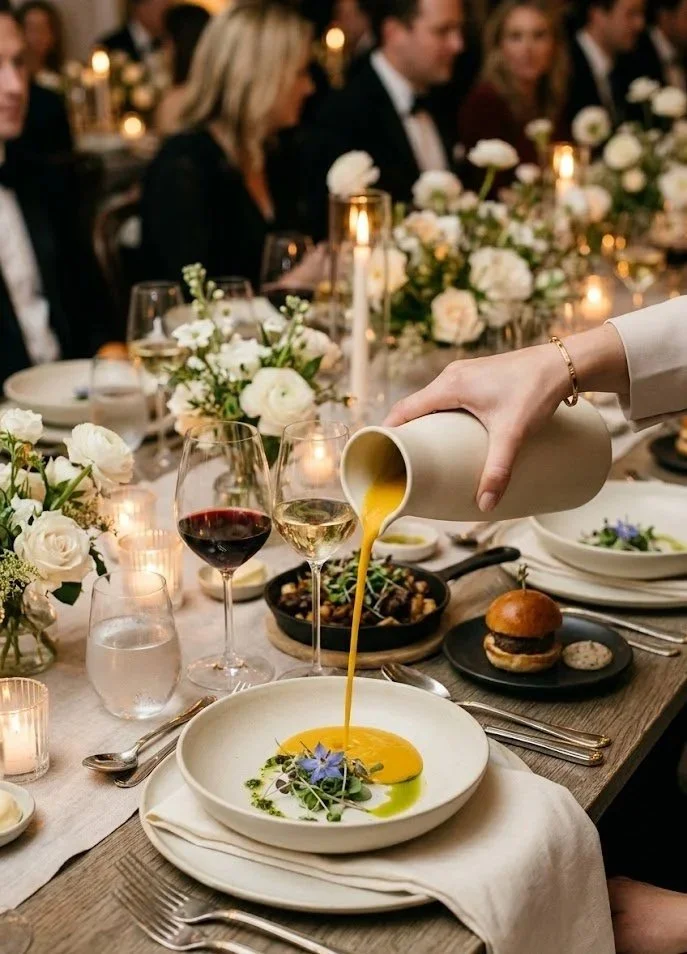
The Concept: A chilled seasonal soup (like a Golden Beet or Pea & Mint) is served in a beautiful bowl or pitcher containing only the garnish (a swirl of herb oil, a single edible flower, or a dollop of creme fraiche). The servers then pour the soup from elegant ceramic carafes simultaneously at each table.
Why it works: It feels like a 5-star Michelin experience. It creates a "moment" of silence and theater before the first bite, making the meal feel incredibly thought-through and expensive without actually increasing the ingredient cost.
2. The "Nostalgic High-Low" Main
Ditch the standard "Beef or Fish" and go for Elevated Comfort Classics.
The Concept: Take a "low-brow" favorite and execute it with high-end ingredients. Think: Short-Rib "Sunday Roast" Sliders on brioche with a truffle-infused jus, or a Deconstructed Seafood Paella served in individual mini cast-iron skillets.
Why it works: People love what they know, but they admire what is refined. Serving a sophisticated version of a "fun" food makes the wedding feel relaxed yet undeniably chic. It’s the "Copenhagen Bar" approach—high energy meets high quality.
3. The Inclusive Edit: Designing for Everyone
In 2026, inclusivity isn't a "special request"—it's a baseline for a good host. A guest who can't eat 80% of your menu won't remember the flowers; they’ll remember being hungry.
The "Invisible" Vegan Option: Instead of a separate "sad pasta" for vegans, design at least one side dish or starter that is naturally plant-based and so delicious that everyone wants it (e.g., Charred Miso Carrots or a Rich Mushroom Risotto).
The Halal & Allergen Logic: Work with your caterer to ensure your "Main" is easily adaptable. Choosing a high-quality poultry or fish as the primary protein often makes Halal compliance seamless, provided the prep is handled correctly.
Clear Labeling: Don't make guests ask. Small, elegant icons on the menu card (V, VG, H, GF) show you’ve already thought of them.
4. The "Mid-Dance" Energy Boost
If you want the party to stay high-energy (the way we did in the CPH bar scene), you need a Late Night Pivot.
The Concept: At 11:00 PM, swap the cake for "Handheld Fuel." Think: Mini Gourmet Grilled Cheese with a tiny shot glass of tomato soup, or Wood-Fired Pizza Slices in custom-branded "Event Edit" boxes.
The Pro Touch: If you have an international crowd, a "Global Snack Station" (like bao buns or street tacos) hits that 18–40 age demographic perfectly.
The Final Edit
A great menu follows a curve: It starts with a spectacle, settles into comfort, and ends with high-energy fuel. When the food feels like part of the entertainment, your guests won't just say the wedding was pretty—they'll say it was the best night of their year.